Artificial intelligence is rapidly transforming many industries and counterfeiting is no exception. In 2026, AI is not only influencing how counterfeit cash is designed and produced, but also how it is distributed, circulated, and concealed, creating new challenges for banks, retailers, and individuals.
AI-driven tools are changing the tactics counterfeiters use to move fake money into everyday circulation.
Smarter Designs, More Convincing Fakes
AI-powered image generation and design software allow counterfeiters to closely analyze real banknotes and recreate complex visual elements such as color gradients, fine-line patterns, and layouts. This reduces production errors and increases the likelihood that fake bills will pass quick visual checks — particularly in fast-paced retail environments.
AI Makes Distribution More Strategic
One of the most significant and less visible impacts of AI is on how counterfeit cash is distributed:
- Location targeting: AI tools can analyze publicly available data to identify high-cash-use businesses, events, or geographic areas where cash transactions are frequent and scrutiny may be lower.
- Timing optimization: Counterfeiters use predictive models to introduce fake bills during peak hours, holidays, or staffing shortages, when employees are less likely to conduct thorough checks.
- Smurfing automation: AI helps coordinate the circulation of small amounts of counterfeit cash across many locations, reducing detection risk while increasing total spread.
These techniques make counterfeit cash harder to trace and prevent large seizure points that law enforcement traditionally relies on.
Blending Counterfeits Into Legitimate Cash Flow
AI is also used to study transaction behavior, allowing criminals to better blend counterfeit bills into normal cash flow. By analyzing patterns such as average transaction size, bill denominations, and customer behavior, counterfeiters can choose when and how to introduce fake notes with minimal suspicion.
Some groups even use AI-driven simulations to test circulation strategies virtually before deploying them in the real world, reducing costly mistakes.
Adapting to Detection and Enforcement
As detection improves, AI allows counterfeiters to adapt quickly. By analyzing which notes are rejected, where they are detected, or which businesses use verification tools, counterfeit networks can reroute distribution to lower-risk channels. This rapid feedback loop makes AI-enabled operations more agile than traditional counterfeiting efforts.
Why Physical Verification Still Works
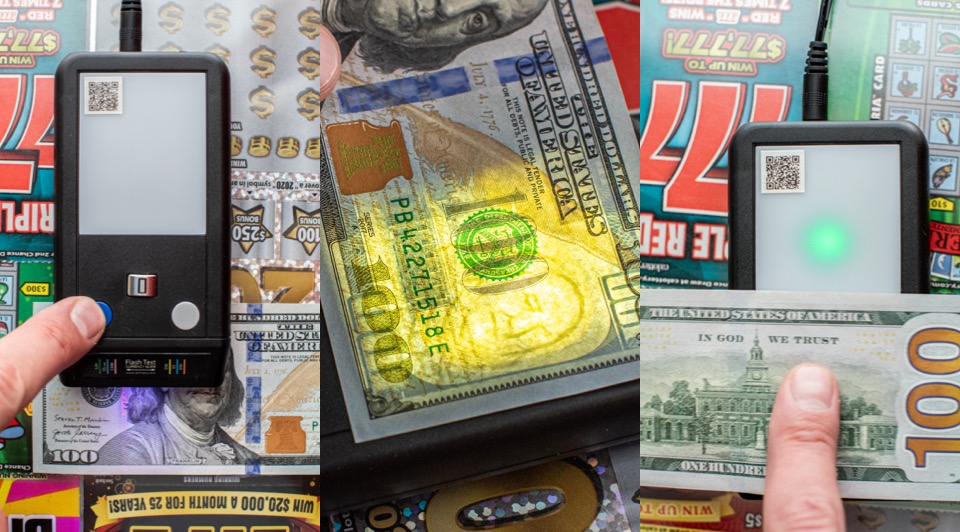
Despite AI’s growing role in distribution strategy, counterfeit cash still struggles to replicate physical and reactive security features such as ink behavior, texture, and UV elements. These characteristics remain difficult for counterfeiters to simulate consistently at scale.
This is where frontline verification remains critical.
How Dri Mark Supports Frontline Defense
Dri Mark’s counterfeit detection products help stop AI-assisted counterfeits at the point of transaction:
- UV detectors quickly reveal missing or incorrect ultraviolet features.
- Color-changing and reactive inks provide immediate feedback when marking suspect bills.
- Portable, easy-to-use tools empower employees to verify cash without disrupting business operations.
By focusing on physical properties that AI cannot easily replicate, Dri Mark products remain effective even as counterfeiters adopt advanced digital tools.